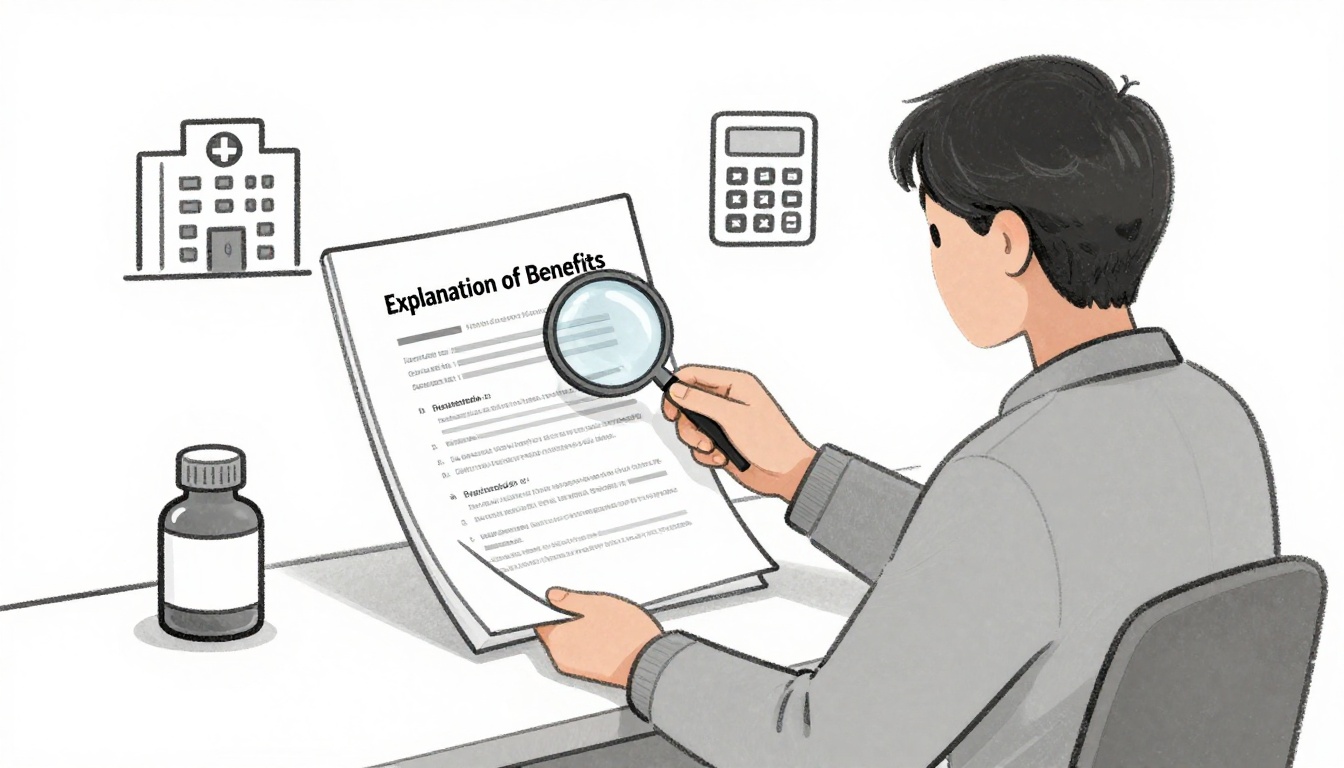
Many people open an Explanation of Benefits, see a page full of numbers, and assume it’s a bill. Then they either panic or toss it aside.
That reaction makes sense. An EOB can look cold and complicated, even when the message is simple. It is a summary from your insurance company after care, not a request for payment. Once you know where to look, it becomes one of the best tools you have for checking claims, spotting errors, and avoiding surprise costs.
A little clarity goes a long way, so start with what an EOB actually tells you.
What an Explanation of Benefits is, and what it is not
An Explanation of Benefits, often called an EOB, is a statement from your health insurer after a doctor, hospital, lab, or pharmacy sends in a claim. It shows how the insurer processed that claim.
In plain language, the EOB tells you four main things. It shows what the provider billed, what your plan allows, what insurance paid, and what part may fall to you. That last part might include a copay, deductible, or coinsurance.
The format changes from one insurer to another. Still, the purpose is the same. An EOB helps you understand how your benefits were applied to a specific service.
As of April 2026, many insurers let you view EOBs in an online portal, while others still send paper copies. Some plans now make digital delivery the default unless you ask for mail. Even so, the document itself has not changed much. It is still a post-claim summary, and it is still worth reading.
If you’d like a plain-language example, the CMS guide to reading an EOB shows what these forms usually include.
Why you get an EOB after a doctor visit, test, or prescription
The process usually starts with care. You visit a doctor, get blood work, fill a prescription, or have imaging done. After that, the provider sends a claim to your insurance company.
Your insurer reviews the claim under your plan rules. It checks things like network status, covered services, negotiated rates, prior authorization, and how much of your deductible you’ve already met. Then it decides what to pay and what amount may be left for you.
That review creates the EOB. So if you had an office visit and lab work on the same day, you might receive one EOB with two service lines, or separate EOBs if different providers billed the services.
How an EOB is different from a medical bill
This part trips people up most often. An EOB explains. A medical bill asks for payment.
Your EOB comes from the insurance company. A provider bill comes from the doctor’s office, hospital, imaging center, or lab. The EOB may show an “amount you may owe,” but that is not always the final number. The provider still has to bill you.
If the provider bill and the EOB do not match, pause before paying.
Compare the dates, service descriptions, and dollar amounts first. A separate provider bill may be correct, but sometimes it is not. For a second look at that difference, this guide on medical bill vs. EOB differences explains why the two documents often arrive close together but mean different things.
The key parts of an EOB you should check every time
Most EOBs use different labels, but the core parts are similar. You do not need to memorize insurance terms. You only need to know what each section means for your wallet.
This quick table shows the parts that matter most.
| EOB section | What it means | What to check |
|---|---|---|
| Patient and provider info | Your name, member ID, provider name, dates of service | Make sure the visit and person are correct |
| Claim number | The insurer’s tracking number for that claim | Keep it if you need to call |
| Service description | Office visit, lab test, imaging, prescription, or procedure | Watch for services you did not receive |
| Amount billed | What the provider charged | This is often higher than the plan rate |
| Allowed amount | The price your plan recognizes for covered care | This number often drives the rest of the claim |
| Plan paid | What the insurer paid the provider | Check that coverage was applied |
| Member responsibility | What may be your share | See whether it was applied to copay, deductible, or coinsurance |
| Remark or denial codes | Short codes that explain adjustments or denials | Read the note or call for a plain-language explanation |
The most useful line on the page is often the one people skip, the allowed amount. That is the price your insurer agrees counts under the plan. If a provider charges $300 for a visit but the allowed amount is $150, your plan usually works from $150, not $300, when the care is in network.
Next, look at how your share was calculated. If the EOB says your amount went to the deductible, that means insurance may not have paid much because you had not met that yearly threshold yet. If it says coinsurance, you are paying a percentage after the deductible. If it says copay, you owe a flat amount.
Also scan for claim status. Some EOBs say “processed,” “paid,” “pending,” or “denied.” Denied does not always mean you must pay the full charge. It may mean the insurer needs more information, the service was out of network, or the claim was coded wrong.
A helpful overview from AARP on tracking medical spending with your EOB points out that these forms often help people catch billing problems early.
How to read an EOB without getting lost in the numbers
The easiest way to read an EOB is to move in order and stay focused on one service line at a time. Do not jump around the page.
Start with the top section. Confirm the patient’s name, the provider, and the date of service. If any of that is wrong, the rest of the page cannot be trusted until you fix that issue.
Then read each service line from left to right. Many EOBs list several charges together. One line might be the office visit. Another could be lab work. A third might be a separate facility fee.
A simple reading order helps:
- Match the service and date to your visit.
- Find the amount billed and the allowed amount.
- Check what the plan paid.
- Look at what was assigned to you.
- Read any note that explains an adjustment or denial.
Here is a simple example. A doctor bills $250 for an office visit. Your insurer allows $140 under the network contract. You still have deductible left, so the insurer pays $0 and applies the full $140 to your deductible. Your EOB may show that you may owe $140, not $250.
That difference matters. Without the EOB, you might not know whether a provider bill is using the correct contracted amount.
If you want another plain-language walk-through, Health Bill Central’s EOB explainer shows how to read the form and compare it with later billing.
How to use your EOB to catch mistakes and avoid overpaying
An EOB is more than a summary. It is your checkpoint before money leaves your bank account.
First, compare the EOB with any bill that arrives later. The provider bill should match the date of service, provider name, and your share. If the bill asks for more than the EOB suggests, contact the billing office and your insurer before paying.
Second, watch for care you did not get. Mistakes happen. A claim may list the wrong visit type, the wrong patient, or a duplicated service line. One typo in a billing code can change what you owe.
Third, pay attention to network clues. If you expected in-network care but the EOB says out of network, call right away. Sometimes a claim was submitted under the wrong tax ID or group number. That can change the price by a lot.
Fourth, keep your EOBs together. They help you track progress toward your deductible and out-of-pocket maximum. That matters more in years when medical costs pile up.
These habits make the process easier:
- Save each EOB as a PDF or keep paper copies in one folder.
- Write the provider bill date on the EOB when it arrives.
- Circle any line you do not recognize.
- Call the insurer’s member services number if a remark code is unclear.
- Ask the provider for an itemized bill if the charges look off.
As of April 2026, many people need to log in to insurer portals to see EOBs quickly, because some plans now limit automatic paper delivery. So it helps to set up your online account early and check it after appointments, tests, and prescriptions.
You may also want a side-by-side example from Medical Bill Reader’s EOB guide, which explains common terms in plain English.
When an EOB looks wrong, take these steps
Do not ignore a strange EOB. Small problems can turn into larger bills if they sit too long.
Call the provider first if the service description or date looks wrong. Billing offices can often confirm whether the claim used the right code and provider details. If the office agrees that something is off, ask them to correct and re-submit the claim.
Call your insurer if the network status, payment amount, or denial reason does not make sense. Have the claim number in front of you. Ask for the reason in plain language, then write down the date, time, and name of the person you spoke with.
If needed, ask about the appeal process. Many plans have deadlines for disputes, so timing matters. Keep copies of the EOB, the bill, and any notes from your calls.
Most of all, do not pay a confusing bill just to get it over with. A few minutes of review can save real money.
Understanding your health insurance EOB does not require special training. You only need to know what the numbers mean, how the claim was processed, and whether the provider bill matches. Once that habit clicks, the form stops looking like a wall of codes and starts working like a record you can use.
If you have questions about your health insurance, a claim, or a bill that just doesn’t sit right with you, don’t hesitate to reach out. You’re not expected to have all the answers and you don’t have to figure it out on your own. If you need guidance, I’m here to help you understand what’s happening and what your next steps can be.
Related Posts